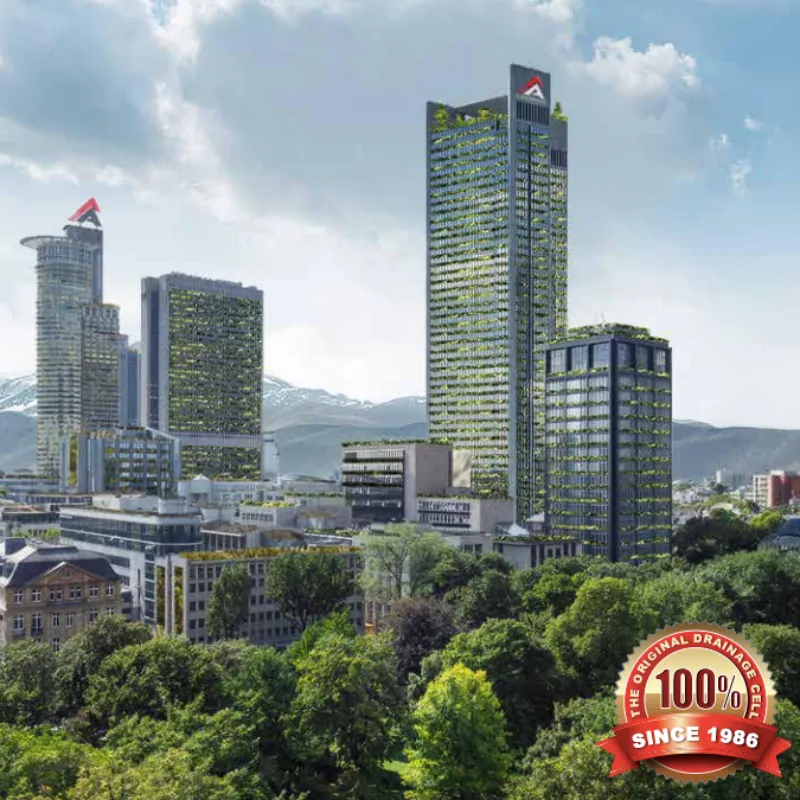

Green Roofs & Vertical Gardens
Atlantis was founded in 1986 by landscape architect Humberto Urriola with the dream of creating Green Cities. In the early 1970s, Humberto developed a vision to cover cities with beautifully landscaped gardens. Hanging gardens to be incorporated into buildings, dense green roofs, and parks and gardens added to the urban landscape... Green Cities set out with the dream of being part of a new urban cycle that improves water quality, reduces polluted runoff, improves air quality, reduces the heat island effect, and improves the mental health of the public.
Atlantis, Green City Vision
Urban Temperature Regulation (Green City Natural Insulation)
The heat island effect of a city can be significantly reduced by the plants and gardens that cover it. It is possible to effectively regulate ambient temperature by increasing the amount of soil and green vegetation on green roofs, green walls, parks, and gardens; vegetation plays a crucial role in urban planning as an ideal carbon sink that absorbs and transforms sunlight, cleans the air, provides oxygen, reduces the risk of flooding, and absorbs carbon emissions, providing natural thermal insulation even during excessively hot summer months.
Healthy Living
Psychological research shows that people experience improved mental health and well-being in environments filled with plants, as opposed to oppressive, artificial settings.
Air Quality and Oxygen Production
Increased vegetation in urban landscapes can significantly improve air quality by increasing oxygen levels through the filtration and conversion of toxins, pollutants, and carbon dioxide that we are exposed to in city life.
Green Urban Transport
The city has extensive public transportation options, and many roads are underground.
Adequate Water Supply and Water Quality for Urban Needs
Increased urban vegetation creates more space for water absorption and infiltration, reducing the risk of flooding, and also provides filtered water for reuse, storage, or recharging natural aquifers, thereby protecting natural waterways.
Urban Agriculture
In addition to the air and water quality benefits provided by increased vegetation, community gardens, rooftop gardens, and vertical farming provide the city with fresh local produce. Localized farming is also a great way to recycle organic waste locally. This combination of urban agriculture and the recycling of local organic waste minimizes the city's reliance on transportation and reduces its carbon footprint.
Urban Biodiversity
A green city covered with plants and gardens creates an ideal environment for the flourishing of local flora and fauna. Artificial wetlands that transform sewage provide sustainable habitats for local flora and fauna.